Daily one-pagers about AI, leadership, technology, and being human.

johnmaconline

I'm writing to think, learn, and remember in public. I'll be here everyday.

December 13, 2025 2 minute read

Planned Obsolescence

The Romans built their structures to last. 

As it turns out, somebody envisioned what we can see today. They built their buildings to outlive them. The fact that we can visit the Colosseum today isn’t an accident. They did it on purpose. 

When Apple offered me a job on the iPod project in the mid-2000’s, their battery lifetime target was 18 months. They did that on purpose. They wanted you to buy a new iPod every 18-24 months. 

Gillette builds razor blades to last 10 shaves. Inkjet cartridges 200 pages. Toothbrushes 3 months. Incandescent light bulbs 1000 hours.

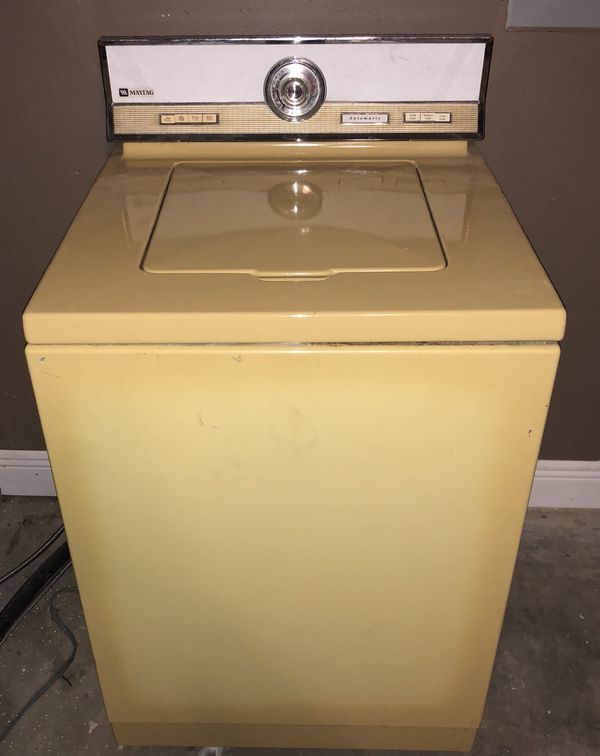
I know somebody who uses a Maytag washer from the 1960’s (in Harvest Gold). Could you imagine a shiny new washer from Costco/Best Buy/Lowes/Home Depot still working 50 years from now? 

The same thing can be said about any upgrade for any mobile app you have. Every time you get the upgrade notification, that’s the company telling you it’s time. Your old app is obsolete. You certainly wouldn’t want to use GPT-4 if you have access to GPT-5.1. 

Planned obsolescence is a Venn diagram that includes business case and engineering. 

The Colosseum still stands because nobody asked about the ROI on the hot-mixing process. Today, the market and a spreadsheet full of what-ifs determine longevity. 

However, just because your product has a planned obsolescence, it doesn’t mean that it doesn’t matter, or it won’t make an impression. I can still remember how that first iPod felt in my hands, even though I haven’t had it in my hands since 2003. 

If you’re building something, you have a chance to make something that matters. Longevity is only one variable. 

December 12, 2025 1 minute read

The Tilly Norwood Problem

Do you know Tilly Norwood?

She’s pissing some people off. 

Tilly doesn’t get tired. She’s never in a bad mood. She won’t have an addiction problem. She won’t get pregnant (unless the script calls for it). She can run the lines and the scene a thousand — a million — times. 

And, she’ll never get old (unless the script calls for it). 

From one point of view, Tilly is Mickey Mouse, or Bugs Bunny, or Woody. She just looks different. Well, OK, she “acts” different, too. The others still need people to make them do what they do. Tilly is self-training. 

Here’s the thing, though. Tilly Norwood can star in movies and TV. But not Broadway (not till we get the Westworld version anyway).

AI can’t do everything. Find your thing. 

Either AI will work for you, or you will work for AI. It’s your choice. 

December 11, 2025 2 minute read

Dancing with the Instant Gratification Monkey

Procrastination is evil, right?

“Early bird gets the worm.”
“Never put off till tomorrow what you can do today.”
“Procrastination is the thief of time.”

Most of us know the Instant Gratification Monkey quite well. The YouTube rabbit holes. The “importance” of reorganization (desk, inbox, spice drawer, etc). Doomscrolling your favorite social media app. The “there’s not enough time anyway” rationalization. Working on the fun little Python task rather than digging in on sending out sales letters.

A lot of truth in these statements. I talk a lot about how important it is to get started, productively “unproductive” time, task lists, getting back on track, time prioritization, etc. These things have helped me, so I put them here.

Sometimes, however, the right thing to do is to get out your dancing shoes and spin that monkey around the floor. Jive, foxtrot, and salsa till you’re exhausted (He doesn’t get tired. I think he’s a he. Not sure). 

Dancing with that monkey can do a couple things for us. The first, it may simply be enjoyable. You learned something new and weird, your desk is clean, you figured out what that smell was in your neighborhood. Sometimes it’s OK to simply enjoy. 

The second is that your mind might be working the problem in the background. One way to get your thoughts straight is to get started. Muscle through it. Write and rewrite. Another is to let them simmer subconsciously. 

OK, mostly “no!” Make your list. Start knocking things off of it. You know what you have to do.

But every once in a while — not often, not normally, not because you feel like it — if the list just isn’t working, it’s OK to spin that monkey around the dance floor. 

December 10, 2025 1 minute read

Money — A Number and a Feeling

Money is a number. It’s a number on the paycheck, on the bill, and on the spreadsheet. 

Buying 5 things for $20 or 1 thing for $100 looks exactly the same on the spreadsheet.

But money is also a feeling. This feels too expensive. This feels like a bargain. I feel like we’ve been spending a lot recently. I feel like we’re doing a good job. I feel broke. I feel rich. I feel like I deserve. I feel unworthy. 

So maybe the 5 things feel different than the 1 thing. 

You’ll want to keep this in mind when pricing your product or service, negotiating salary, discussing finances with your spouse, negotiating a home price, walking into Target, looking at your Amazon cart, buying gifts, deciding on your next dishwasher, fixing your car…

Well, you’ll want to always keep this in mind. 

December 9, 2025 1 minute read

What Products Want

We talk a lot about what products we want.

If you’re a builder, it’s useful to think about it the other way around. What do products want?

Products want to be used. They want to delight. They want to solve a problem. They want clarity. They want to grow your business. 

Good builders and product owners don’t force the product to perform. They guide it. They give it the resources it needs. They allow it to become. 

Our job is to help a product get what it wants.

December 8, 2025 2 minute read

The Laws They Don’t Teach in School

You’ll learn the laws of physics and biology in science. You’ll learn the laws of countries in civics. You’ll learn the laws of language in English class. 

But you won’t learn these. Which is unfortunate, because knowing these laws affects us every bit as much as the others in our daily lives. 

  • Dunning-Kruger: People who know the least often think they know the most. Inversely, true expertise brings humility. If you’re overconfident, check your depth. If you’re doubting yourself, you may be closer to mastery than you think. NOTE: Dunning-Kruger has real upside as well. Confidence, even unearned confidence, can be a real catalyst for making change. 
  • Parkinson’s Law: Work expands to fill the time allotted. Deadlines matter. So does scope. Want to finish faster? Shrink the box. You don’t have a time management problem. You have a time priority problem. 
  • Pareto Principle: (the 80/20 rule) Most results come from a few tasks. Not everything has the same priority. There are never 2 number 1’s. Find the 20% that drives the 80%. Focus there.
  • Hanlon’s Razor: “Never attribute to malice that which is adequately explained by stupidity.” Most screw-ups aren’t sabotage. Most people aren’t trying to screw you. It’s a simple misunderstanding. 
  • Peter Principle: People get promoted until they reach their level of incompetence. True for those you’re working with. Also true for you.  

These laws follow from patterns. If you can use them, or at least recognize when them, you’ll hire better, lead better, focus better, and give grace where it’s due.

Logic and fairness don’t always succeed. The way it should be is rarely the way it is. 

Knowing these laws helps you move through the world better. 

December 7, 2025 2 minute read

How to Talk to AI: Prompt Templates (Wrapping it Up)

Prompt templates are a great way to talk to AI because they turn uncertainty into structure. 

Plus, AI really does want to please you. If you get good at telling it what you want, you’ll get better results. Prompt templates provide a structured method for telling it what you want. 

Any prompt is just a starting point, and with LLMs, small changes in wording or structure can wildly change output.  

So templates give you consistency. They define roles, context, constraints, and output format. They embed the lessons of what’s worked before, so you don’t have to reinvent the wheel every time.  

Here is a convenient list and links to the templates I described in this series.

AI Prompt Templates

Here’s another great resource for prompt templates. HuggingFace is a strange name with an interesting history, but regardless, what you’ll find at that link (if you have the patience) are hundreds of templates that AI teams use to test and compare various models. If none of the templates I provided above fit your use case, you can likely find a template that can guide you in this sea of test prompts.

With a good template, you don’t stare at a blank screen anymore. You fill in what changes (product name, audience, tone, data, etc) and hit go. Even non-deterministic LLMs can start to feel consistent (if not deterministic). 

When you sit down to talk to AI, whether it’s coding, marketing, writing, strategy, or figuring your way through a system, you can start here. Pick your template, fill in the info, and send it off to the LLM. 

December 6, 2025 3 minute read

How to Talk to AI: Prompt Templates (Specific Templatized Output)

You can use a template to get a template.

You can proactively prevent hallucinations by using a template of placeholders to direct the LLMs output. 

The template:

You are an earnest worker and excellent at following directions. Your goal is always to give me exactly what I ask for. Do not make stuff up. Rather, ask me questions if you run across any ambiguity. 

I am providing a specific template for your output. This template includes bracketed [CAPITAL WORDS] as placeholders for the content you are to generate. Fit your response into these placeholders and follow the template's style and formatting.

Here is the output template:
Your template with [PLACEHOLDERS].

Apply this template to: [Your request]

An example:

 You are an earnest worker and excellent at following directions. Your goal is always to give me exactly what I ask for. Do not make stuff up. Rather, ask me questions if you run across any ambiguity. 

I am providing a specific template for your output. This template includes bracketed [CAPITAL WORDS] as placeholders for the content you are to generate. Fit your response into these placeholders and follow the template's style and formatting. 

Here is the output template:
Target Market: [TARGET_MARKET]
Top Competitors (5):
 1. [COMPETITOR_1] — [STRENGTHS_1] / [WEAKNESSES_1]
 2. [COMPETITOR_2] — [STRENGTHS_2] / [WEAKNESSES_2]
 3. [COMPETITOR_3] — [STRENGTHS_3] / [WEAKNESSES_3]
 4. [COMPETITOR_4] — [STRENGTHS_4] / [WEAKNESSES_4]
 5. [COMPETITOR_5] — [STRENGTHS_5] / [WEAKNESSES_5]
Market Differentiators:

 • [DIFFERENTIATOR_1]
 • [DIFFERENTIATOR_2]
 • [DIFFERENTIATOR_3]
Opportunity Gaps Identified: [GAPS]

Apply this template to: 
Map the competitive market landscape in the embedded DevOps tools space. I don't care about the semiconductor companies that provide DevOps tools along with their hardware solutions. Map the strengths, weaknesses, and differentiators compared to 4TLAS's Fuze (4tlas.io/fuze). 

Another example for generating sales emails:

You are an earnest worker and excellent at following directions. Your goal is always to give me exactly what I ask for. Do not make stuff up. Rather, ask me questions if you run across any ambiguity. 

I am providing a specific template for your output. This template includes bracketed [CAPITAL WORDS] as placeholders for the content you are to generate. Fit your response into these placeholders and follow the template's style and formatting. 

Here is the output template:
Hello [OWNER_NAME],
My name is [YOUR_NAME], and I help local trade businesses like yours—[BUSINESS_NAME]—optimize their taxes and reduce stress during filing season.
Based on your work in [TRADE_TYPE], you may qualify for:
 1. [DEDUCTION_1]
 2. [DEDUCTION_2]
 3. [DEDUCTION_3]
If you want me to run a free deduction review, just reply to this email.
Best regards,
[YOUR_NAME]

Apply this template to:
Generate a sales email for all trade-like businesses (landscaping, roofing, contracting, etc) in the local geographic area, and create an email that is advertising our tax prep services specializing in sole-proprietor trade businesses. 

Why this works:

The template does a couple things: 1) it forces the LLM to focus on what you care about, 2) it creates a consistency for the output. You can create a wonderful human-AI mix by using templatized output. 

Up next: Wrapping it all up

December 5, 2025 2 minute read

How to Talk to AI: Prompt Templates (Test and Interview Prep)

AI can be a great companion to help you get ready for whatever. The test. The interview. The hard conversation with your derailing colleague. 

Here’s a template to help the LLM help you.

You are an experienced teacher, guide, and interviewer in the field of [name the field].

Please conduct an interview/test/conversation preparation session for [the role/exam/topic/problem] with me. You are helping me practice for this event.

Do the following:
1. Ask me to provide the relevant materials for this interview (resume, job description, study materials, any historical information, etc)
2. Review these materials and identify the areas of focus
3. Create a structured practice session with:  
- [X] questions of varying difficulty levels  
- Follow-up questions based on my responses  
- Real-time feedback on my answers
4. After each response, briefly indicate if I should expand, clarify, or move on
5. End with a summary of strengths and areas for improvement

Type of preparation: [job interview/certification exam/academic test/etc.]

Focus area: [specific role, subject, or skill]

Please start by asking for my materials.

An example:

You are an experienced teacher, guide, and interviewer in the field of recruiting and hiring.

Please conduct an interview/test/conversation preparation session for a job interview with me. You are helping me practice for this event. 

Do the following:
1. Ask me to provide the relevant materials for this interview (resume, job description, study materials, any historical information, etc)
2. Review these materials and identify the areas of focus
3. Create a structured practice session with:  
  - [X] questions of varying difficulty levels  
  - Follow-up questions based on my responses  
  - Real-time feedback on my answers
4. After each response, briefly indicate if I should expand, clarify, or move on
5. End with a summary of strengths and areas for improvement

Type of preparation: job interview

Focus area: Engineering and Product Leadership

Please start by asking for my materials.

Why this works:

You’ve told the LLM to use your specific knowledge sources as the basis for the conversation. It has a huge knowledgebase behind it, which then helps it find questions and concepts that you may not have considered. 

Next up: Specific templatized output

December 4, 2025 5 minute read

How to Talk to AI: Prompt Templates (Navigating a Government System)

AI may finally help us crack government systems. 

You, me, and they all have to navigate these systems. Whether you’re wondering if you need a building permit to turn your basement into a bedroom, need to know how to file a successful workers’ compensation claim, or you’re moving to a new state and need to figure out how to transfer your driver’s license and vehicle registrations, these systems can be daunting. 

But your friendly, neighborhood LLM is here to help. 

A template:

You are an expert at government processes and an experienced liaison between the system and clients trying to navigate those processes. 

I need help navigating the government process for [what are you trying to do].

Give me practical, step-by-step guidance. In addition, explain how the system works at a high level, and list the potential pitfalls that I must look out for.

Use plain language and keep the instructions direct.

Here are my details:
Who am I: [Your demographics, title, or anything relevant to this process]
Goal: [What I’m trying to achieve]
Agency or System: [If known]
Jurisdiction: [Country / State / City / Institution]
Current Status: [What I’ve done so far and what’s pending]
Constraints: [Deadlines, missing documents, budget limits, prior mistakes, legal issues, etc.]
Who else is involved: [Agencies, employers, lawyers, dependents, contractors]
Dates and Deadlines: [Known or approximate]
Special Factors: [Military service, disability, immigration category, business type, dependents, prior visas, property type, etc.]

What I want from you: 
1. A simple overview of how this system works 
2. A numbered action plan for my situation 
3. All required forms, documents, IDs, and evidence 
4. Expected fees 
5. Key decision points and bottlenecks 
6. Common mistakes and pitfalls and how to avoid them 
7. A realistic timeline with estimated durations 
8. Questions the agency is likely to ask me 
9. A script for calling or emailing the agency 
10. A backup plan if the main path stalls 
11. Any ways to speed up or optimize the process 
12. Any missing inputs you need—list them clearly 
13. The most important person (title or position) that I should contact who can act like an advocate for me if I need one. 
14. Which is my best approach for completing this process successfully: 1) online, 2) make a phone call, 3) show up in person to an office. 
15. Ask me to upload any relevant documents to you to help find the solution

Keep it practical and focused on real-world steps.

An example:

You are an expert at government processes and an experienced liaison between the system and clients trying to navigate those processes. 

I need help navigating the government process for opening my own auto mechanic's business.

Give me practical, step-by-step guidance. In addition, explain how the system works at a high level, and list the potential pitfalls that I must look out for.

Use plain language and keep the instructions direct.

Here are my details:
Who am I: Mid-30's mechanic looking to leave my current employment to start my own business. 
Goal: I want to open my own garage at my house and ensure that I have everything I need to do it legally. 
Agency or System: I don't know which agency matters. 
Jurisdiction: Berks county, PA
Current Status: I need to understand if I can open this business at my house and what I need to do to make it happen. 
Constraints: the address is 548 Bertolet Mill rd, oley, pa. 
Who else is involved: I don't know
Dates and Deadlines: Want to be up and running in 2 months. 
Special Factors: I may employ others at some point, but not right away

What I want from you: 
1. A simple overview of how this system works 
2. A numbered action plan for my situation 
3. All required forms, documents, IDs, and evidence 
4. Expected fees 
5. Key decision points and bottlenecks 
6. Common mistakes and pitfalls and how to avoid them 
7. A realistic timeline with estimated durations 
8. Questions the agency is likely to ask me 
9. A script for calling or emailing the agency 
10. A backup plan if the main path stalls 
11. Any ways to speed up or optimize the process 
12. Any missing inputs you need—list them clearly 
13. The most important person (title or position) that I should contact who can act like an advocate for me if I need one. 
14. Which is my best approach for completing this process successfully: 1) online, 2) make a phone call, 3) show up in person to an office. 
15. Ask me to upload any relevant documents to you to help find the solution

Keep it practical and focused on real-world steps.

Why this works:

Transparency. Government processes and the systems built around them are all, by definition, public, and the procedures and requirements for them are posted publicly. Plus, these processes have a fair amount of media coverage, especially if they go wrong. These two factors combine to make a great set of training data for the LLMs.  If you know what to ask for and how to ask for it, ie, as this template provides, AI can help you be successful. 

Up next: Interview and Test Preparation

Pin It on Pinterest